
Have you ever found yourself in a state where you’re unable to move or speak upon waking up or falling asleep? If so, you may have experienced sleep paralysis, a fascinating phenomenon that has captivated cultures around the world for centuries. From old wives’ tales to ancient folklore, different cultures have developed their own unique explanations for this perplexing state of being. In this article, we will explore the intriguing folklore and myths surrounding sleep paralysis in various cultures, shedding light on the diverse interpretations of this perplexing phenomenon.

Africa
Folklore beliefs and explanations
In many African cultures, sleep paralysis is often attributed to supernatural beings and spirits. The Yoruba people of Nigeria, for example, believe that sleep paralysis occurs when the person is being visited by the spirit of a deceased relative who is trying to communicate with them. This spirit is known as “omo-aye,” and it is believed to bring messages from the afterlife. In other African traditions, sleep paralysis is often interpreted as an attack by witches or evil spirits. It is believed that these entities can enter the sleeping person’s body and cause them to become paralyzed.
Traditional practices and remedies
To protect themselves from sleep paralysis, many Africans employ various traditional practices and remedies. One common method is the use of amulets and talismans believed to ward off evil spirits and provide spiritual protection. These objects are often worn or placed near the bed to create a barrier against negative energy. Additionally, certain herbs and plants, such as lavender or sage, are considered to have spiritual properties that can help ward off evil spirits and protect against sleep paralysis. Furthermore, prayer and spiritual rituals are often performed to invoke the assistance of ancestors or deities in safeguarding against sleep paralysis.
Asia
Interpretations in Chinese culture
In Chinese culture, sleep paralysis is often associated with the concept of “ghost oppression.” It is believed that during sleep, the soul leaves the body and can be vulnerable to malevolent spirits. These spirits can then take advantage of the person’s physical body and cause sleep paralysis. Chinese folklore also suggests that engaging in positive behaviors, such as being virtuous and benevolent, can help prevent sleep paralysis by ensuring the protection of the soul.
Japanese folklore and supernatural beings
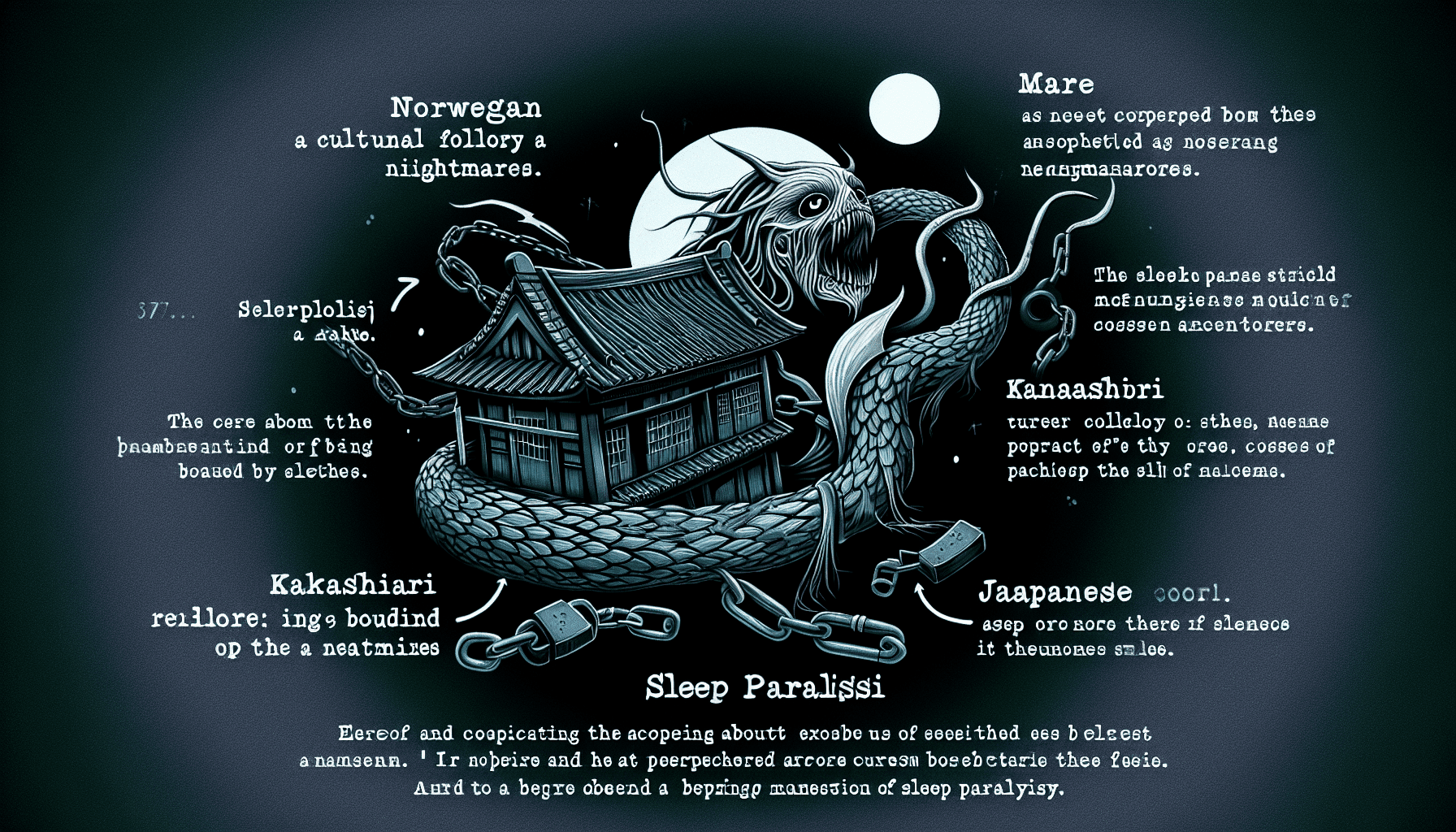
In Japanese folklore, sleep paralysis is commonly attributed to supernatural beings such as “kanashibari” or “rokurokubi.” Kanashibari is believed to be a spirit that sits on the chest of a sleeping person, causing them to become paralyzed. Rokurokubi, on the other hand, is a mythical creature that appears as a human during the day but can extend its neck to great lengths at night. It is said that encountering a rokurokubi during sleep can lead to intense nightmares and sleep paralysis.
Europe
The night hag – a common myth
In European folklore, the concept of the night hag is prevalent when it comes to explaining sleep paralysis. The night hag is believed to be a supernatural entity that sits on the chest of a sleeping person, rendering them immobile and causing a feeling of suffocation. This myth is found in various European cultures, with slight variations in the appearance and behavior of the night hag. It is said that by invoking religious symbols or praying, one can ward off the night hag and prevent sleep paralysis.
Witchcraft and demons in medieval Europe
During medieval times in Europe, sleep paralysis was often associated with witchcraft and demonic activity. It was believed that witches, in their astral form, could visit people during sleep and cause paralysis. Additionally, demons were thought to be responsible for this condition, tormenting individuals and feeding off their fear. To protect against these supernatural occurrences, various rituals, spells, and charms were used, such as placing salt near the bed or using holy water to ward off evil spirits.
North America
Native American legends and spiritual explanations
In Native American cultures, sleep paralysis is often explained through a deeply spiritual lens. Many tribes believe that during sleep, the individual’s soul can leave their body and travel to other realms or communicate with ancestors. Sleep paralysis, in this context, is seen as a temporary disconnection between the physical body and the soul. Some Native American tribes also believe that certain negative energies or entities can cause sleep paralysis, and to counteract this, they perform rituals and use protective objects to ensure spiritual well-being.
Folk remedies and protections
To protect against sleep paralysis, Native American tribes employ a range of folk remedies and protective practices. These can include the use of various herbs, such as sage or cedar, which are believed to cleanse and purify the environment. Traditional rituals, such as smudging or performing a sweat lodge ceremony, are also performed to cleanse the spirit and maintain a strong connection with the spiritual world. Additionally, the use of dreamcatchers, believed to trap negative energy and nightmares, is a common practice.
South America
Shamanistic views and rituals
In South American cultures, particularly within indigenous groups, sleep paralysis is often seen as an opportunity for spiritual growth and guidance. Shamans, or spiritual leaders, interpret sleep paralysis as a state where individuals can receive messages from the spirit world. It is believed that during sleep paralysis, the person’s soul is able to travel to different realms and communicate with spirits. Shamans may guide individuals through rituals and practices to help them harness the spiritual potential of sleep paralysis.
Spiritual beings and entities
Various spiritual beings and entities are often associated with sleep paralysis in South American folklore. For example, the “duende” in traditional Latin American folklore is a mischievous spirit believed to cause sleep paralysis, nightmares, and other sleep disturbances, as a form of punishment for disrespectful behavior. Additionally, the “yacuruna” in Amazonian folklore is a water spirit that can bring about sleep paralysis as a way of communicating a message or guide someone in their spiritual journey.
Australia
Aboriginal Dreamtime interpretations
In Aboriginal culture, sleep paralysis is understood within the framework of the Dreamtime, a spiritual and ancestral realm. It is believed that during sleep paralysis, individuals can have direct contact with the Dreamtime and receive important messages or insights. The experiences during this state are highly regarded and considered to be a significant part of an individual’s spiritual journey. Aboriginal elders often guide individuals on how to interpret and understand these experiences.
Spiritual significance in indigenous beliefs
Sleep paralysis holds deep spiritual significance in Indigenous Australian beliefs. It is seen as an opportunity for spiritual growth, self-discovery, and connection with ancestral spirits. The concept of “Tjukurpa” is central to Aboriginal spirituality, which encompasses knowledge, creation stories, and the interconnectedness of all beings. Sleep paralysis experiences are viewed as a way to tap into this profound spiritual heritage and gain wisdom from the Dreamtime.
Middle East
Jinn and demonic experiences in Islamic culture
In Islamic culture, sleep paralysis is often attributed to encounters with jinn, supernatural beings made of smokeless fire mentioned in the Quran. It is believed that some jinn can cause sleep paralysis as a means of tormenting individuals or asserting their power over them. Islamic teachings emphasize the recitation of specific prayers and verses from the Quran as protection against jinn and to seek refuge in Allah during such experiences.
Supernatural explanations and amulets
To protect against sleep paralysis and encounters with jinn in Middle Eastern cultures, various supernatural explanations and amulets are employed. Some individuals wear protective amulets, such as “hamsas” or “evil eye” charms, to ward off evil spirits and negative energy. Additionally, reciting specific verses from the Quran, such as Ayat al-Kursi, is believed to provide spiritual protection. Seeking the guidance of religious leaders or performing specific rituals are also common practices to safeguard against sleep paralysis.
Caribbean
Vodou traditions and sleep paralysis
In Caribbean cultures, particularly those influenced by Vodou practices, sleep paralysis is often attributed to the involvement of spirits or deities. Vodou, a religion that blends African, European, and indigenous beliefs, recognizes sleep paralysis as an opportunity for spiritual beings to communicate with individuals and impart messages or requests. It is believed that during sleep paralysis, individuals may receive special abilities, revelations, or warnings from the spirits.
Obeah and spiritual entities
In Caribbean folklore, sleep paralysis is also associated with the practice of “obeah,” a form of folk magic and spiritualism. It is believed that certain practitioners of obeah can deliberately induce sleep paralysis as part of their spiritual practices. Additionally, various spiritual entities, such as the “duppy” in Jamaican folklore or the “loup-garou” in Haitian folklore, are associated with sleep paralysis and are believed to have the power to cause these experiences.
Pacific Islands
Polynesian myths and spirits
In the Pacific Islands, sleep paralysis is often explained within the context of Polynesian myths and spiritual beliefs. Among Polynesian cultures, it is believed that during sleep paralysis, individuals can access the spirit world and receive guidance from ancestral spirits or deities. These experiences are seen as a bridge between the physical realm and the spiritual realm, offering individuals a chance to connect with their heritage, gain wisdom, and strengthen their spiritual connection.
Trauma and ancestral connections
In the Pacific Islands, sleep paralysis is sometimes associated with ancestral connections and traumatic experiences. It is believed that unresolved trauma or unfulfilled obligations to ancestors can manifest in sleep paralysis, with the purpose of guiding individuals towards healing or resolution. In these cases, individuals may seek the guidance of spiritual leaders or undergo traditional healing practices to address the underlying issues and restore balance with their ancestral heritage.
Indigenous Cultures
Shared themes and differences across cultures
While each culture holds unique beliefs and explanations surrounding sleep paralysis, there are shared themes and similarities across indigenous cultures. Many cultures view sleep paralysis as a spiritual experience that provides access to other realms, a means of communication with ancestors or spirits, or as an opportunity for personal growth and enlightenment. These shared themes highlight the significance of the spiritual world in the lives of indigenous cultures and the importance of navigating these experiences with reverence and respect.
The role of storytelling and cultural preservation
Across indigenous cultures, storytelling plays a vital role in passing down knowledge and preserving cultural beliefs about sleep paralysis. Elders and spiritual leaders often share their experiences and interpretations, imparting wisdom and guidance to younger generations. Through storytelling, indigenous cultures ensure the continuity of their beliefs, practices, and values, fostering a deeper understanding of sleep paralysis and its place within the broader spiritual and cultural context. It is through these narratives that the significance of sleep paralysis continues to be honored and respected.